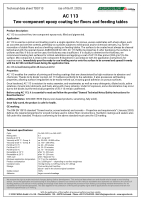

2-C Epoxy Floor / Feeding Table Coating
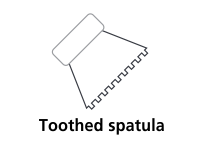
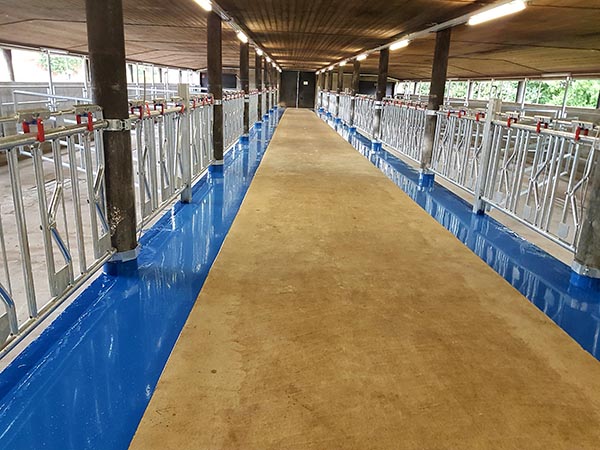
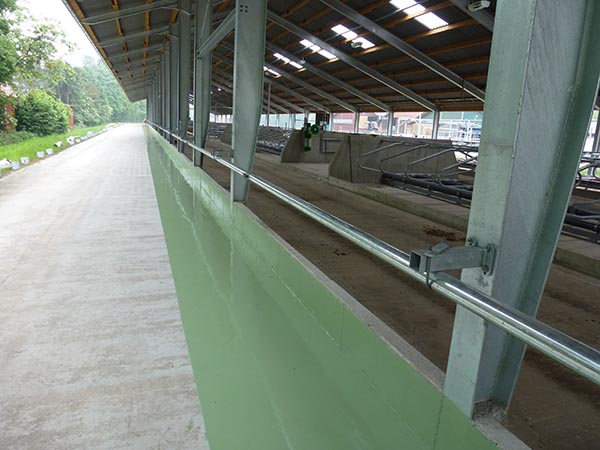
AC 113 is used as a primer and levelling compound in a single step for porous, uneven, sharp-edged cement-bound substrates such as concrete and cement screeds, preferablyon mechanically and/or chemically stressed surfaces, e.g. for stable floor renovation and as a levelling coating on feeding tables. The surface to be coated must always be cleaned beforehand with AGROCOLOR AC 600 special cleaner and, in the case of rough and absorbent substrates,primed with AC 115 Flex (approx. 300 g/m²). AC 113 fulfils its properties when a uniform, even surface is visible after curing; if this is not the case, the thickness was insufficient. In case of doubt, we recommend creating sample areas on critical substrates to determine the thickness. Mix component A (resin) with component B (hardener)according to the processing instructions for reaction resins. Immediately pour the finished levelling compoundover the surface to be coated and spread evenly with the AC 506 notched trowel within the processing time. AC 113 can be loaded after 48 hours at 20 °C!
- Solvent-free
- Emission-free
- Physiologically harmless
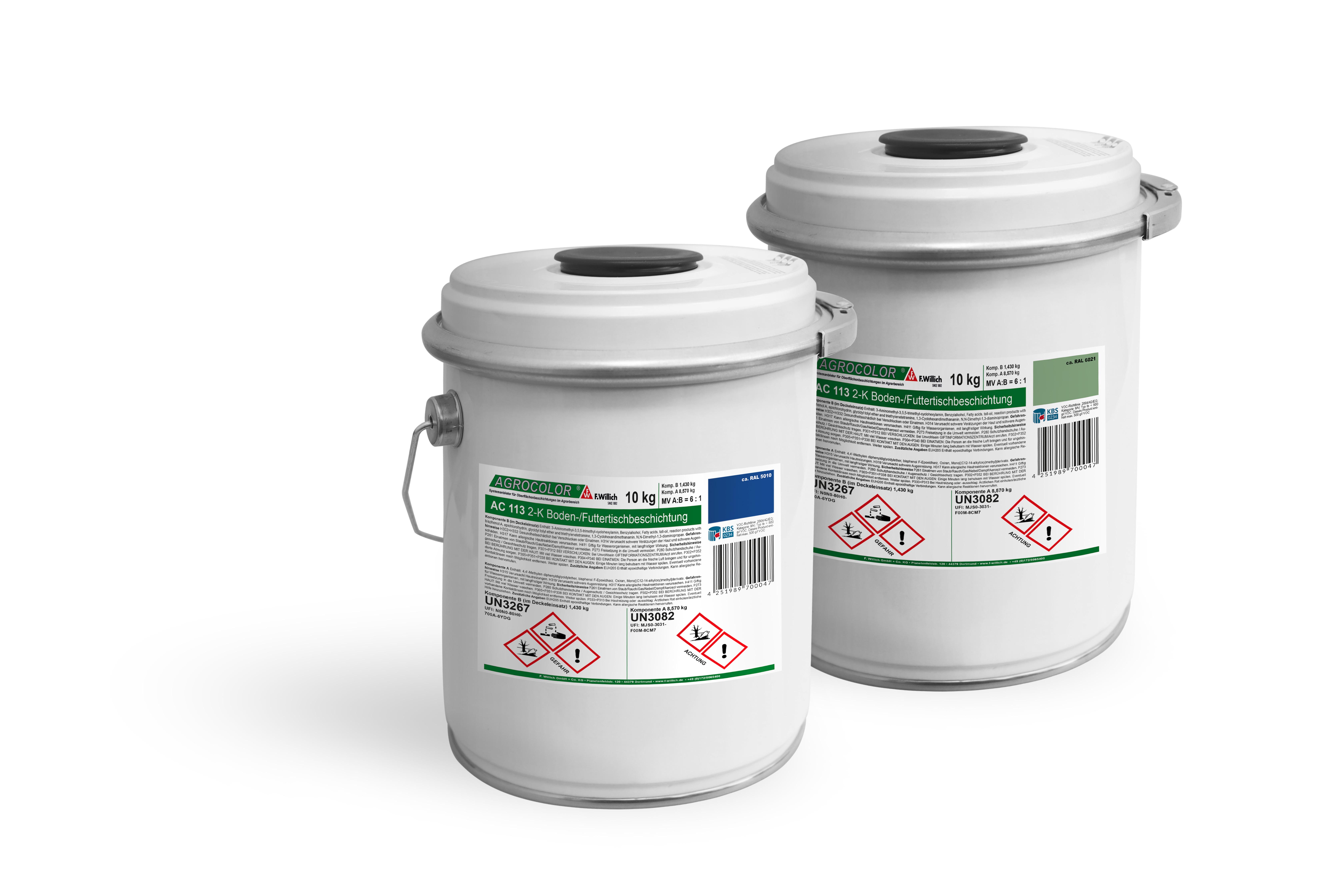
Container size: 10 kg
Colors: ca. RAL 6021, ca. RAL 5010
Surfaces:
 Concrete
 Asphalt
- Tiles
- Ferrous metals
- Screed
- Bitumen
- Reactive resin bonded substrate
- Wood
- Other metals
- exposed concrete
- Laminate/PVC
- Glass
- Drywall
Tools:


Application instructions
When applying reactive polymers, the temperature of the surface is crucial, in addition to the ambient temperature. Chemical reactions generally slow down at low temperatures; this also extends the application, recoatability, walkability and curing times. At the same time, the higher viscosity leads to an increase in consumption. At high temperatures, the chemical reactions are accelerated, meaning that the above-mentioned times are shortened accordingly. For the reactive polymer to cure completely, the average temperature of the surface you are applying it to must be above the minimum temperature. For more detailed application instructions, please refer to the technical data sheet and the sheet on reactive resins / application instructions.